- Category Marryalyan
- DATE 23 Feb 2026
Cancer Symptom Trials and Palliative Care Clinical Studies Collaborative
February 2026
PaCCSC & CST Development Workshops 2026
5-6 May 2026 | University of Technology Sydney
We are hosting two invitation-only Concept Development Workshops focused on Pain (5 May 2026) and Fatigue (6 May 2026). Researchers from all career stages and health disciplines are invited to submit an expression of interest to workshop their clinical trial concept focusing on improving the management of these symptoms and improving quality of life for people with cancer and other life-limiting illnesses.
These interdisciplinary workshops bring together clinical trial experts, health economists, biostatisticians, quality-of-life experts, and consumers with lived experience, providing the perfect environment to refine and strengthen your concept.
Concepts do not need to be fully developed, early-stage ideas are welcome. Submissions are due by 5pm on 16 March 2026 via the PaCCSC & CST New Study Proposal Form, with outcomes to be announced by early April 2026. All submissions remain confidential, and intellectual property stays with the proposer. Travel and accommodation support will be available for successful applicants travelling from outside Sydney.
Email enquiries to [email protected].

IMPACCT Rapid Program
The IMPACCT Rapid Program is a collaborative international quality improvement program that studies the prospective use of medications and non-pharmacological interventions commonly used in palliative care and cancer symptom management.
Participating in the program provides an opportunity to develop the capacity and research capabilities of you and your staff who may not otherwise have the opportunity to engage in research.
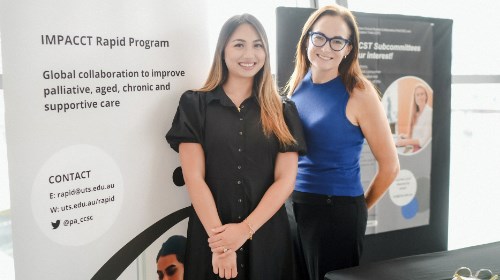
Left to right: IMPACCT Rapid Program Coordinator, Ms Yinyin Phyo, and Rapid Program Chair, Dr Caitlin Sheehan
Adult series
Ranitidine/Famotidine for Malignant Bowel Obstruction – series 56
The Rapid series on Ranitidine or Famotidine for malignant bowel obstruction is open for recruitment. This study aims to explore the current clinical practice and evaluate the efficacy and safety of ranitidine or famotidine for people with malignant bowel obstruction, a serious complication of advanced cancer.
Ranitidine and famotidine are histamine (H2) receptor antagonists (H2 antagonists) that are sometimes used to reduce gastric secretion, thereby improving vomiting. To date, no study has been published looking at how effective and safe these medications are in malignant bowel obstruction patients in a palliative care setting. The current evidence base in this area is insufficient to make any recommendations.
Dressings for malignant cutaneous wounds – series 38
The Rapid series on dressings for malignant cutaneous wounds is also open for data collection. In this series, we aim to identify the wound management procedures that clinicians use for malignant cutaneous wounds, how clinicians decide on what course of management they will take for the wound, and which management strategies achieve the goals of care.
Malodour is an overwhelming concern for the person with the wound, their family, and carers. The physiological, psychological and sociological consequences of living with a malodorous wound have a dramatic impact on comfort, pain, and quality of life.
The holistic management of these wounds is challenging. There is no robust evidence for which of the current treatment options are the most effective at improving quality of life or managing symptoms.
Paediatric series
Ketamine for cancer-related mucositis pain – series 42
In this series, we are seeking to establish the broad utility and toxicity of ketamine for children with chronic non-cancer pain and cancer pain in real-life situations.
Ketamine is widely used for paediatric general and regional anaesthesia, procedural sedation, as an adjunct to opioid analgesia, and as a low-dose continuous infusion for the treatment of both acute and complex pain.
If you can help us to collect data to improve the available evidence about the effectiveness of ketamine for children with cancer-related mucositis pain, please get in touch.
To express interest in participating in these series or to learn more about other series in the IMPACCT Rapid Program, visit uts.edu.au/rapid or email [email protected].
EOIs: Join a PaCCSC & CST Symptom Node Subcommittee
Help shape the future of palliative care and cancer symptom management
Researchers, clinicians and consumers with an interest in palliative care and/or cancer symptom management are invited to express interest in joining a PaCCSC & CST Symptom Node Subcommittee.
Each of our seven Symptom Node Subcommittees (SNSCs) leads a dedicated research program focused on a specific symptom:
-
- Appetite and cachexia
- Breathlessness and sleep
- Cognitive and neurological disorders
- Fatigue
- Gut dysfunction
- Nausea
- Pain
This is an excellent opportunity to extend your personal research profile as part of a collaborative research team, while contributing to better quality-of-life outcomes for patients and families.
We'd love to hear from you if:
-
- you have an interest in collaborating on a research program investigating one or more symptoms and its impacts on people with cancer or in palliative care
- have capacity to be committed and engaged to support the work of the node
Commitment
-
- Term of membership: two years
- Meeting schedule: quarterly 1-hour meetings.
For questions or to express interest in joining an SNSC, please email [email protected].

A/Professor Hannah Wardill, Chair of the Gut Dysfunction Symptom Node SubCommittee
PaCCSC & CST Research Forum: Save the Date
24-25 February 2027 | International Convention Centre (ICC), Sydney
Preparations for the PaCCSC & CST Research Forum 2027 are in full swing! We invite you to join us for this two-day forum, bringing together leaders and emerging voices to examine the scientific evidence shaping best practices in cancer symptom management and palliative care.
This forum welcomes researchers, healthcare professionals and consumers with experience or an interest in palliative care or cancer symptom management research.
Join us for an opportunity to engage with experts in the field, exchange ideas, and strengthen your collaborative networks across the research community.
Registration for the forum will open soon. Become a PaCCSC and/or CST member today to access discounted registration and receive updates on upcoming events and research opportunities. Membership is free.
You can also revisit highlights from our successful 2025 Research Forum here.
Email enquiries to [email protected].
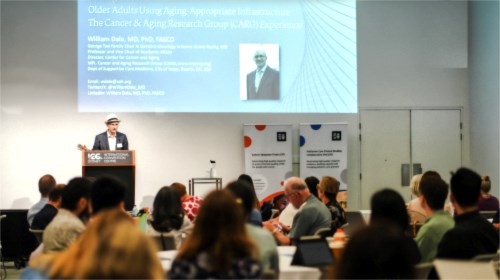
Renowned geriatric oncologist, Professor William Dale, presenting at the PaCCSC & CST Forum 2025, ICC Sydney
Join Australia's leading oncology community & make an impact
Become a COSA memberTwitter
@COSAoncology
Follow

COSAoncology 12 hours ago
Earlybird closes on Sunday 22 March! A weekend of engaging and interactive workshops and lively discussion. For cancer pharmacists at all stages of their careers. Earn 10+ self-report CPD points. Gain insights you can apply immediately in practice. pic.
Read More >
COSAoncology 2 days ago
Arrangements are well underway for our 2026 COSA ASM at the ICC Sydney in November. The ASM website is now live and we encourage you to submit your work for consideration in the program in a submitted symposium or as an oral or poster presentation. #COSA26 pic.
Read More >
COSAoncology 12 days ago
Cancer pharmacists, register now for this 2-day intensive course. Advanced Stream offerings include AI in Cancer Pharmacy, BiTE updates & Cardio-Oncology. Junior Pharmacists jump start your knowledge & skills in lymphoma, breast, lung & colorectal cancer. pic.
Read More >
COSAoncology 20 days ago
Cancer pharmacists, have you registered for this 2-day intensive course in Melbourne in May? With Foundation & Advanced Streams to suit pharmacists at all levels. Access earlybird & COSA member discounts Not a member? Join to save pic.
Read More >
COSAoncology 21 days ago
Our February member newsletter is out now. Check your inbox for COSA news, events, resources, journal articles and more. Or read it online anytime at Not receiving it? Login to the new COSA member system and update your preferences. pic.
Read More >
COSAoncology 26 days ago
An unmissable opportunity for cancer pharmacists at all levels! Learn new skills, build on your existing knowledge, network and grow your career. Register today to secure your place. Save on your registration with earlybird and COSA member discounts. pic.
Read More >
COSAoncology one month ago
RT by @cosaoncology: Don't miss your chance to give your research a place in the global spotlight & help accelerate progress in cancer care. Submit your abstract to 2026 ASCO Breakthrough today! The deadline for submission is 2 weeks away—Feb. 24 at 11:59 pm (ET): #ASCOBT26 pic.
Read More >
COSAoncology one month ago
For World Cancer Day, COSA and CNSA have released a joint position statement on the contribution of nurses to cancer survivorship care in Australia, with recommendations for strengthening survivorship care nationally. Read more pic.
Read More >
COSAoncology one month ago
Our January member newsletter is out now. Check your inbox for COSA news, group updates, affiliate events, resources, journal articles and more. Or read it online anytime at pic.
Read More >
COSAoncology one month ago
Congratulations to COSA members, and friends of COSA, who were recognised in this year's Australia Day Honours List: Emeritus Prof Bruce Armstrong AC, Dr Glenn Begley AM, Ms Kim Hobbs AM, Mr Michel Itel OAM, and Prof Robert Newton AM. pic.
Read More >